SEPTEMBER 2025 | ISSUE 52

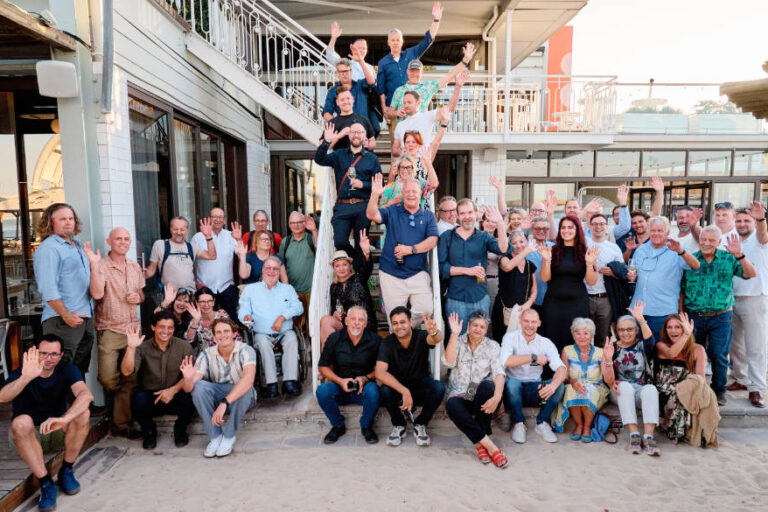
The Growing Timber Connections conference, Timber Construction Colloquium, and tour of the University of Pretoria’s Engineering 4.0 Timber Laboratory demonstrated something crucial: the supply chain from plantation to construction site is ready. This collaborative academic platform, driven by UP’s York Timbers Chair, connects commercial timber growers with sawmills, architects, engineers, and developers with the government and private sector supply chains.

Yet, a glaring gap became apparent. While we discussed realigning grading standards, the rise of eucalyptus as a construction material, the advantages of digital design tools and manufacturing solutions, we missed the elephant: How do we convince the specifiers and consumers that timber is uniquely viable and essential for Sub-Saharan Africa’s exploding urban population?

The current approach isn’t working. Poorly and slowly constructed brick and concrete homes sprawl across low-cost housing estates. Wood, plastic, and corrugated iron shelters built by innovative “township architects” and “kazi-economics” are temporary, highly flammable, and unsafe solutions that don’t create lasting livelihoods. These traditional materials cannot produce quality and desirable housing at the required speed or scale.

Timber can!

But only if we commit to a new mindset: prefabricated, modular, mass-produced components that are easy to assemble, environmentally resilient, safe, and creatively designed. The technology exists. The timber exists. The advocacy exists. Africa’s housing crisis demands timber solutions. What’s missing is action by the government and developers to lead by piloting a prefabricated mass timber housing project. We must make the case impossible to ignore.

Without plantation forestry, there would be no timber. This month, we join the forestry industry in celebrating Mondi’s transfer of the Ihluku timber farm to Imsebe Enterprises. As Nelly Ndlovu of Mondi Zimele notes, the partnership proves that “economic transformation and inclusive growth, when executed with vision and collaboration, can deliver powerful outcomes.”

WBA/SAF September 2025 | Issue 52

Meanwhile, Sappi Forests reminds us that commercial forestry and conservation aren’t contradictory. Sappi’s inclusive indigenous tree programme is continuing its work of reintroducing rare species threatened by overharvesting and protecting natural forest patches while meeting the demand for traditional medicines.

Keep growing timber connections.

EXPRESSION OF INTEREST (EOI) FOR PROVISION OF ENUMERATION, GROWTH & YIELD RESEARCH AND QUALITY ASSESSMENT SERVICES

The purpose of this expression of interest (EOI) is to engage company profiles from interested parties who wish to participate in this tender for the provision of Enumeration, Growth & Yield Research and Quality Assessments in Mondi South Africa Forestry Plantations across the KwaZulu-Natal and Mpumalanga region.

The scope of work required for the Enumeration, Growth & Yield Research and Quality Assessments above would include, but not be limited to:

  • Pre-harvesting enumerations,
  • Ad hoc enumerations,
  • Growth and yield research trial measurements,
  • Establishment phase quality assessments.
Mondi logo

FORESTRY NEWS

FRESH OF THE SAWMILL

LATEST IN WOODWORKING

ENVIRONMENTAL NEWS

PAST ISSUES

AUGUST 2025 / ISSUE: 51

WBA/SAF July 2025 | Issue 50

JULY 2025 / ISSUE: 50

JUNE 2025 / ISSUE: 49

WBA/SAF May 2025 | Issue: 48 - Cover

MAY 2025 / ISSUE: 48

WoodBiz Africa magazine and SA Forestry Online have joined forces to create a combined platform providing richer content, enhanced services, and broader coverage, all while maintaining the quality and trust both platforms are known for

ForSawn Media, the publisher of WoodBiz Africa, has acquired SA Forestry and its related media offerings, effective 1 September 2024. The merger consolidates the efforts of both platforms into a new brand, symbolising our enhanced capacity to serve the forestry and wood products sector.

SA Forestry is an iconic brand and an invaluable voice and record of the development of the forestry industry in Southern Africa. SA Forestry’s long-time editor, Chris Chapman, is the Contributing Editor and part of the team ensuring a seamless transition and continuity in the quality of content you have come to expect.

WoodBiz Africa’s strength lies in its expanding audience of architects, engineers, designers, developers and suppliers in the built environment while serving foresters, sawmillers, wood processors, kitchen, furniture and shopfitting manufacturers, researchers, engineered timber products producers and the woody biomass industry.

WoodBiz Africa & SA Forestry presents comprehensive and insightful coverage of the circular forest-based bioeconomy in Africa. We are committed to delivering the best content about and for our sector.

ForSawn Media logo